All Puneites at some point or the other visit the arterial Jangli Maharaj Road (popularly known as JM Road) in the Deccan area. Whether to take a stroll at Sambhaji Park, watch a performance at Bal Gandharva Rang Mandir, grab a pizza at Supreme Corner, Pav Bhaji at Shiv Sagar or indulge in shopping. However, not many Puneites are aware of an 8th century temple amidst the hustling and bustling JM Road.
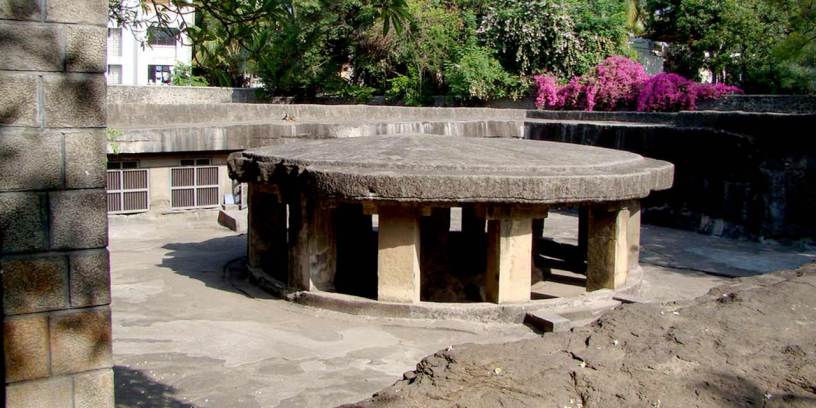
The Pataleshwar caves temple is an 8th century monolith rock temple built by the Rashtrakuta Dynasty. This simple and archaic temple is an ASI protected monument. Patal is a Sanskrit word that means ‘underworld’ or ‘netherworld’ and eshwar means ‘God’. This translates to ‘God of the netherworld’, this temple is dedicated to Lord Shiva.
The entrance to the caves is pretty inconspicuous, keep an eye open for the entrance board just as you enter JM Road soon after the COEP college hostel after Sancheti hospital. Parking on JM road can be a challenge, you could look for parking in the adjoining by-lanes.
There is a small peaceful garden around the temple complex, you will often find families chilling in the gardens and enjoying a mini-picnic or to get away from the hubbub of the city even if for a short duration. The thick foliage is such a charming sight amidst the scorching sun.
One might imagine that such an 8th century marvel would have visitors thronging to see it. However, this is one of the hidden gems this city has to offer and you will hardly find a crowd here. A few enthusiastic people are all that you will find at the temple.
Photography enthusiasts will find an interesting frame or two here for sure. You will at times find a priest within the campus dressed in all monochrome shades except the brightly coloured saffron headgear. This bright spot of colour against the muted grey cave walls is an interesting capture.
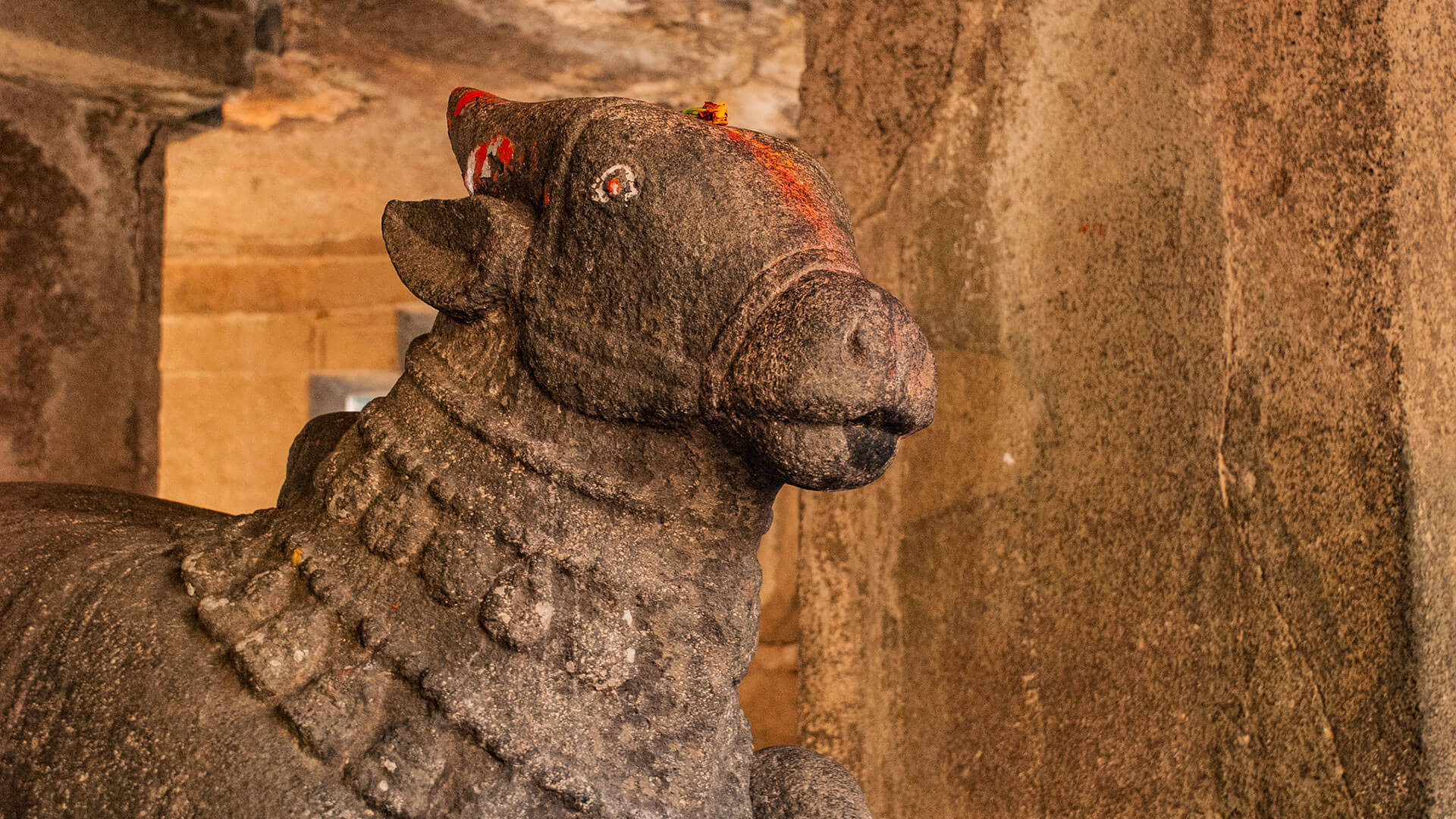
Like all temples dedicated to Shiva, there is a stately Nandi guarding the temple. Nandi is the sacred bull of the Hindu god Shiva. When the world becomes evil, Shiva destroys it to make way for beneficial change. Nandi is Shiva’s animal form, his ride, and his most ardent worshipper. Don’t miss the second exquisitely carved statue of Nandi on the left hand corner of the complex, most people tend to miss this one!
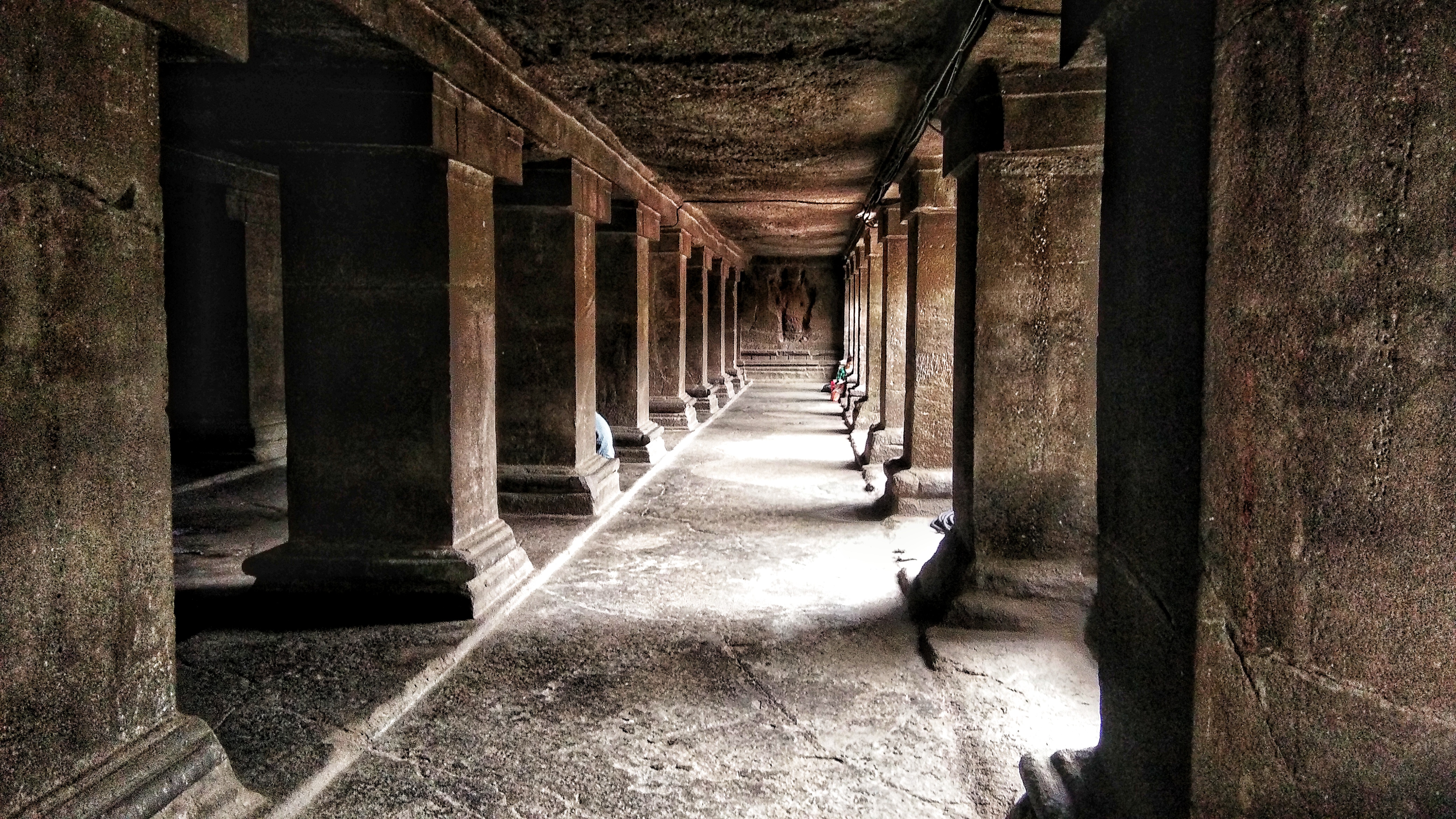
The main Shiva shrine is still frequented by locals. Like all temples, one must keep their shoes outside before entering the temple sanctum. The stone structures of the cave keep it cool irrespective of the heat outside. Akin to most cave temples, symmetrically lined pillars support the cave’s roof. Remember not to circumambulate (parikrama) the shivling – the sanctum where the main deity resides. According to scriptures, only half-parikrama must be carried out by the devotees around the Shiva Linga. Shiva is both ‘Aadi’ (beginning) and ‘Anant’ (everlasting). Thus, the divine and endless energy (Shakti) flowing from him is represented in the form of Nirmili which is the narrow outlet from where the milk and water flows. It is a sacred part of the Shivling and should never be over-stepped.
There are three sanctums at the temple, according to legend, the sanctums on either side of Lord Shiva were of Lord Brahma and Lord Vishnu. But the original statues were lost and sometime in the mid 19th century were replaced by statues of Ma Parvati (Shiva’s Consort) and Lord Ganesha.
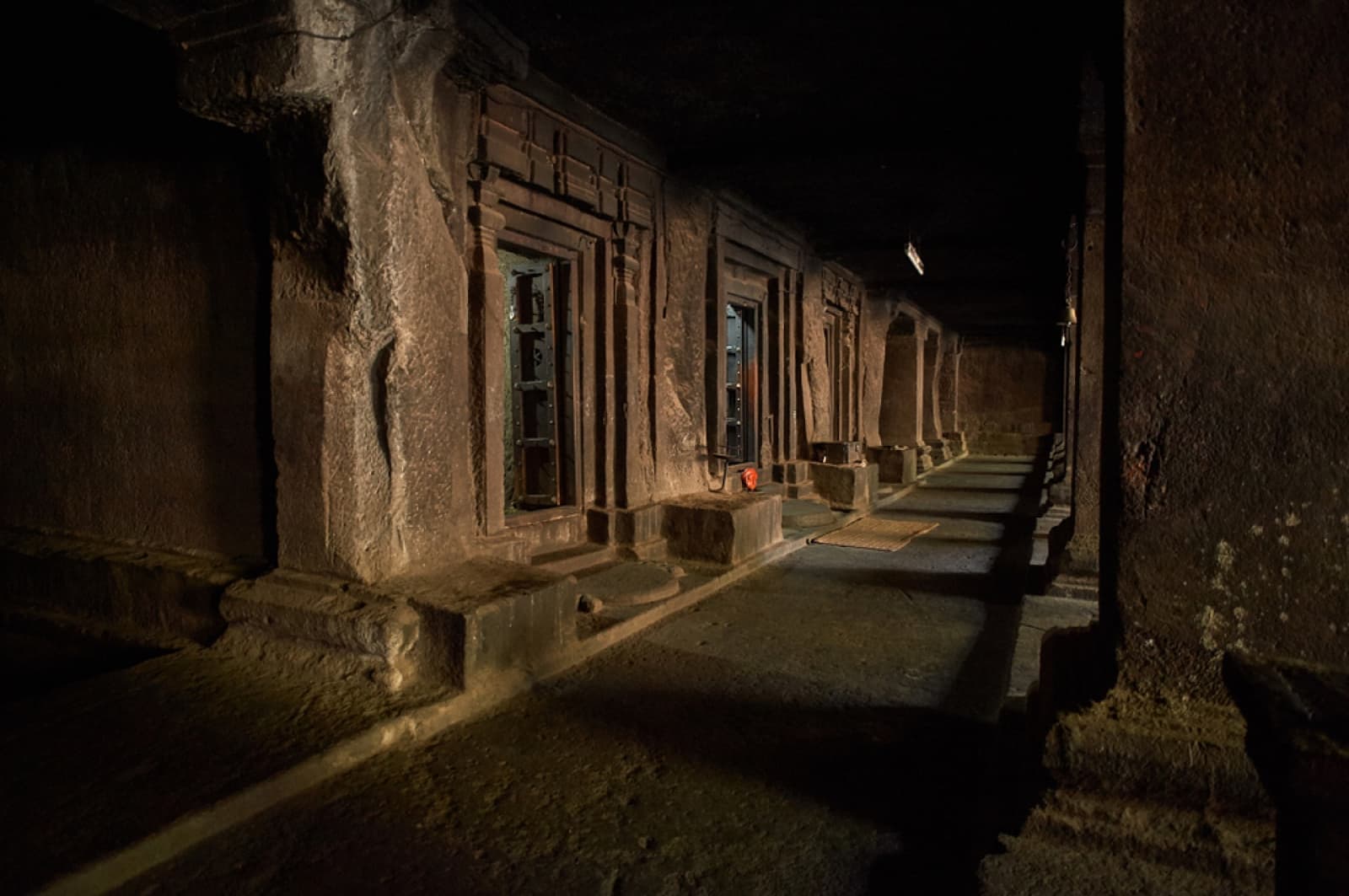
The carvings and miniatures sculpted on the walls of this centuries-old temple are a sight to behold.There are some walls where one can notice unfinished carvings. No one knows the actual reason but there are two theories. One that the makers discovered a fault line and further carving would make the structure unstable and hence abandoned the site. The second theory is that of political destabilisation. The precise history of the cave temples is unknown, adding a touch of mystery and leaving it up to your imagination to explore this historical wonder.
The Pataleshwar Caves, are also referred to as the Panchaleshvara temple or Bhamburde Pandava cave temple or the Pandoo caves. The legend is that the Pandavas had rested here during exile. There is also a small museum at the grounds, which has some interesting exhibits including a grain of rice engraved with 5,000 characters.
A walk through this ancient marvel will be a short visit not more than 15 – 20 minutes, I reckon. Of course you could decide to sit in the tranquil atmosphere for longer. The entry to this temple is free and the timings are from 6:30 am to 8:30 pm on all days of the week.
If you are in Pune around Diwali (aka Triprui Poornima / Karthik Poornima), you must make a trip to this cave temple. On this festival of lights the entire campus and temple is decorated with diyas or earthen lamps and looks simply stunning.
Getting There: Pataleshwar Caves
Deepotsav Pataleshwar Temple – Video Credit Anuradha Joshi
 Pune Metro